At a Glance
Industry
Life Insurance
Role
Built and led a full-funnel digital marketing growth program.
Timeline
2020–2025
scope
Paid Media · SEO · Content · CRO · Analytics · CRM · Martech
Results
+99% Applications
+59% New Life Policies
+27% Revenue
−31% CPA
+178% Paid Digital Contribution
These company-level outcomes reflect the change from the 2019 baseline and represent contributions from the broader business, not digital marketing alone.
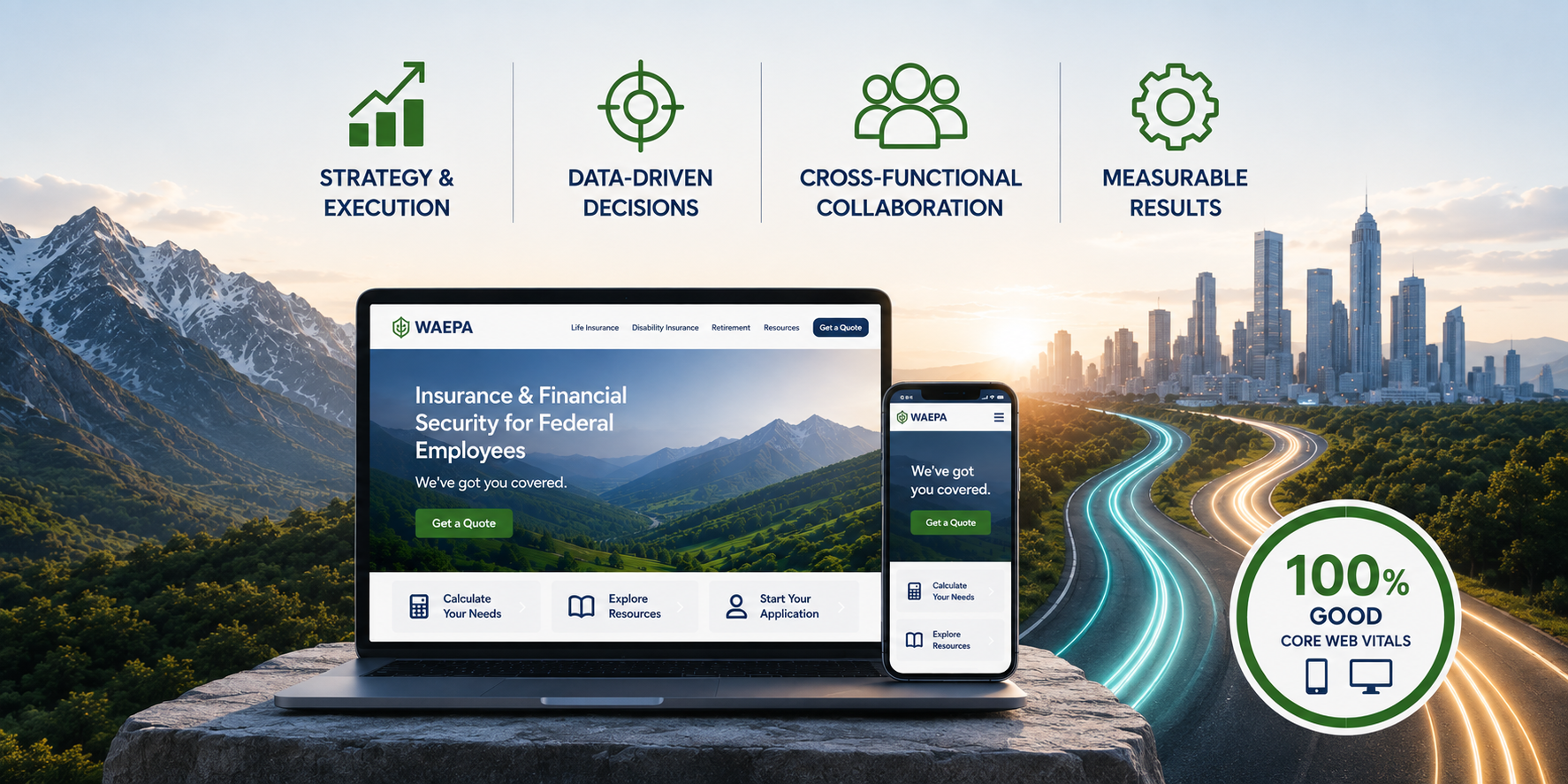
When I joined WAEPA in 2020, digital marketing was already established—but it wasn’t yet operating as a cohesive growth engine. Over the next several years, I built the strategy, acquisition infrastructure, measurement framework, and cross-functional processes needed to turn a collection of digital activities into an integrated, always-on growth system.
WAEPA already had digital marketing when I arrived, but it was primarily focused on capturing existing demand rather than creating and nurturing it.
Paid search was heavily weighted toward branded terms, with approximately 68% of search spend going toward brand. Much of the digital budget was concentrated in the DC Metro, despite more than half of prospects living elsewhere. Programmatic display and geofenced video were intended to reach federal employees around government buildings, but the pandemic and shift to remote work undermined the strategy.
There was also no ongoing paid social or YouTube program, while approximately 75% of organic traffic was coming from branded searches.
the bigger issue
The bigger issue was that these activities weren’t connected by a comprehensive customer-journey strategy.
Where the Program Stood in 2020
Search ad spend
Weighted toward capturing demand that already existed.
organic traffic
Flips to 25% branded / 75% unbranded by 2023 — see Results.
I saw an opportunity to build something different: a full-funnel digital strategy that could reach qualified prospects earlier, give them reasons to engage, capture those who weren’t ready to apply, and progressively move them toward conversion.
Life insurance is a high-consideration purchase, yet most advertising and calls-to-action effectively asked prospects to “Apply Now.”
That created a fundamental gap in the customer journey. Someone could click an ad, visit the website, decide they needed more information, and leave without giving WAEPA a way to continue the relationship.
The opportunity was therefore bigger than generating more applications.
I wanted to build a system that could:
create demand
Reach qualified prospects earlier.
capture demand
Give a lower-commitment way to engage.
educate & Nurture
Answer questions, build confidence.
convert
Reduce friction, ease next step.
MEASURE → LEARN → OPTIMIZE
I built the program around four interconnected priorities.
01
Create Demand
Expand awareness and reach qualified federal employees beyond WAEPA’s traditional geographic footprint. I expanded paid digital investment and developed a data-informed market expansion strategy using federal workforce data, WAEPA customer data, historical performance, and geographic analysis. This enabled broader investment across Google Search, Microsoft Search, Google Display, YouTube, Facebook, and eventually additional channels such as Reddit and OTT.
02
Capture Demand
Give prospects who weren’t ready to apply a lower-commitment way to engage. I built lead-generation opportunities across the website, including gated content, newsletter signups, popups, calculator lead capture, and other secondary conversion opportunities.
03
educate & Nurture
Help prospects answer questions, overcome objections, and build confidence. I researched customer questions, competitor experiences, internal site-search behavior, and information gaps, then worked with Content and Creative partners to develop resources and messaging for different stages of the customer journey.
04
convert
Reduce friction and make it easier for qualified prospects to take the next step. That meant improving product pages, calculators, website UX, performance, accessibility, trust signals, and conversion paths while developing creative specifically for different funnel stages.
MEASURE → LEARN → OPTIMIZE
Across all four priorities, I introduced funnel-specific micro-conversions—such as product-page views, calculator interactions, leads, click-to-apply, and application starts—so channels could be evaluated based on the role they played rather than solely on completed applications.
I also developed customer lifetime value and conversion-value frameworks that enabled value-based bidding and gave me a common economic metric for comparing different funnel actions and channels.
The strategy required building capabilities across the entire digital ecosystem. The individual initiatives were interconnected: more acquisition required better customer experiences; more traffic created a need for lead capture; lead generation created a need for nurture and CRM integration; and full-funnel marketing required better measurement.
Expanding the acquisition engine
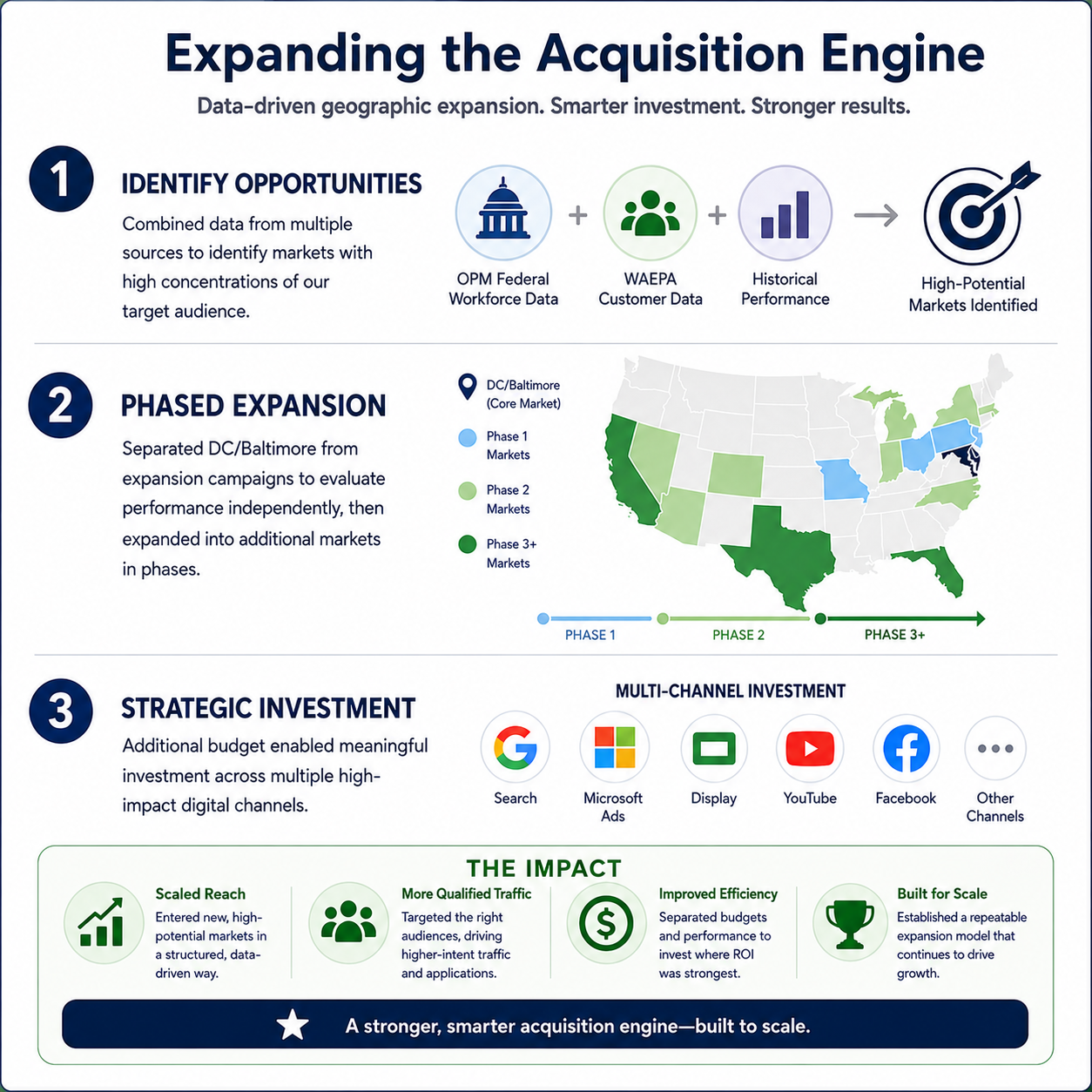
I developed a phased approach to geographic expansion, combining federal workforce data with customer and historical performance data to identify markets with high concentrations of the target audience.
The additional budget allowed meaningful investment across Search, Display, YouTube, Facebook, and other channels. I separated DC/Baltimore from expansion campaigns so budgets and performance could be evaluated independently, then expanded into additional markets in phases.
A $100K GI Facebook campaign provided an early test case. It exceeded its goal for application clicks and generated five new applications against a goal of one, providing the evidence to launch WAEPA’s first always-on Facebook program.
Turning traffic into relationships
I built lead generation into the website so traffic didn’t have to result in an application to create value.
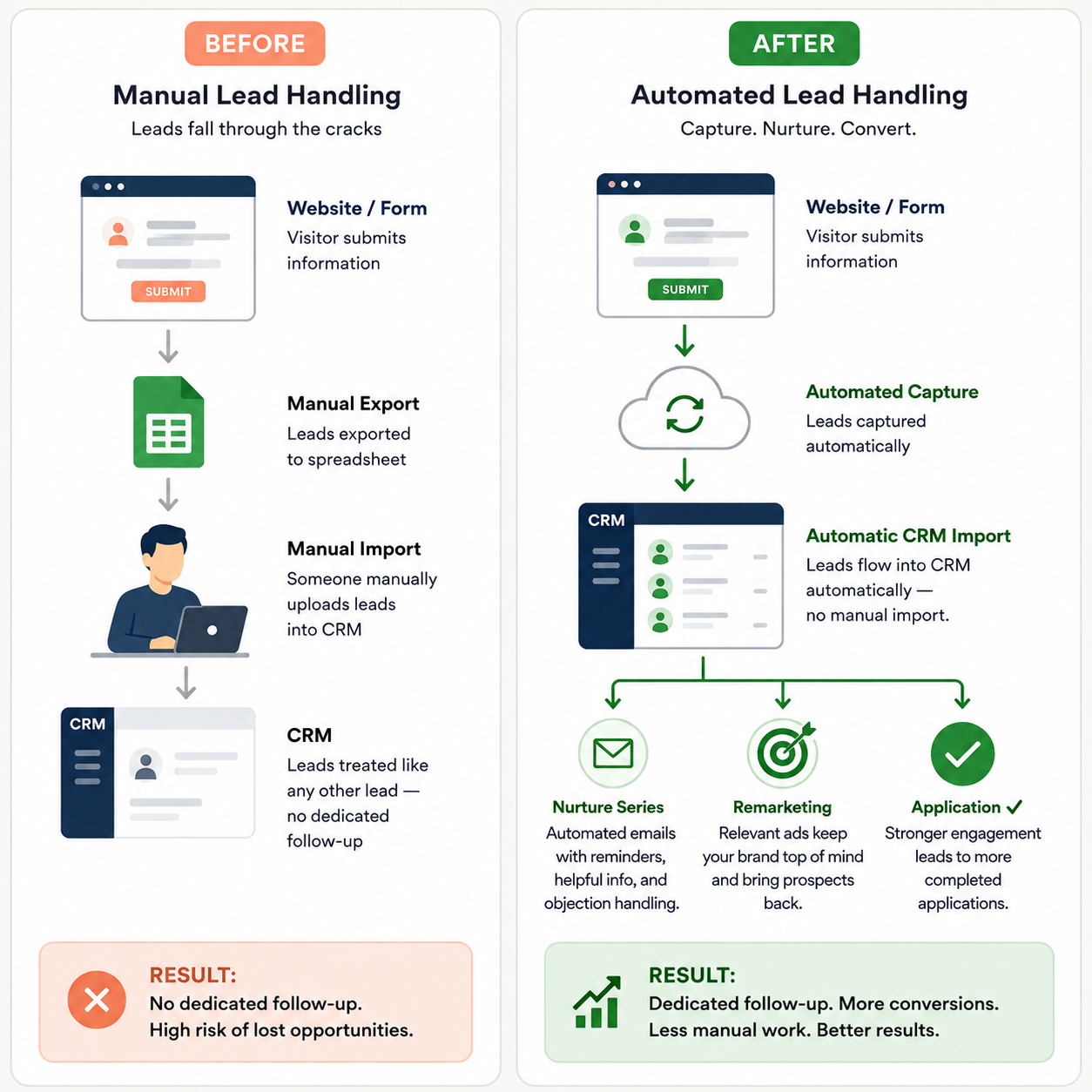
One particularly strong example was application abandoners. Their data was previously delivered through a manual process and imported into the CRM periodically, after which they were treated like generic leads.
I advocated for an automated nurture series that could remind prospects to return, provide helpful information, address objections, and reinforce WAEPA’s credibility. I helped advance the idea with the new Director of Marketing, who implemented the nurture series within her first 90 days. I later helped with the technical implementation that moved abandoner data directly into the CRM each day.
Building the customer journey and digital foundation
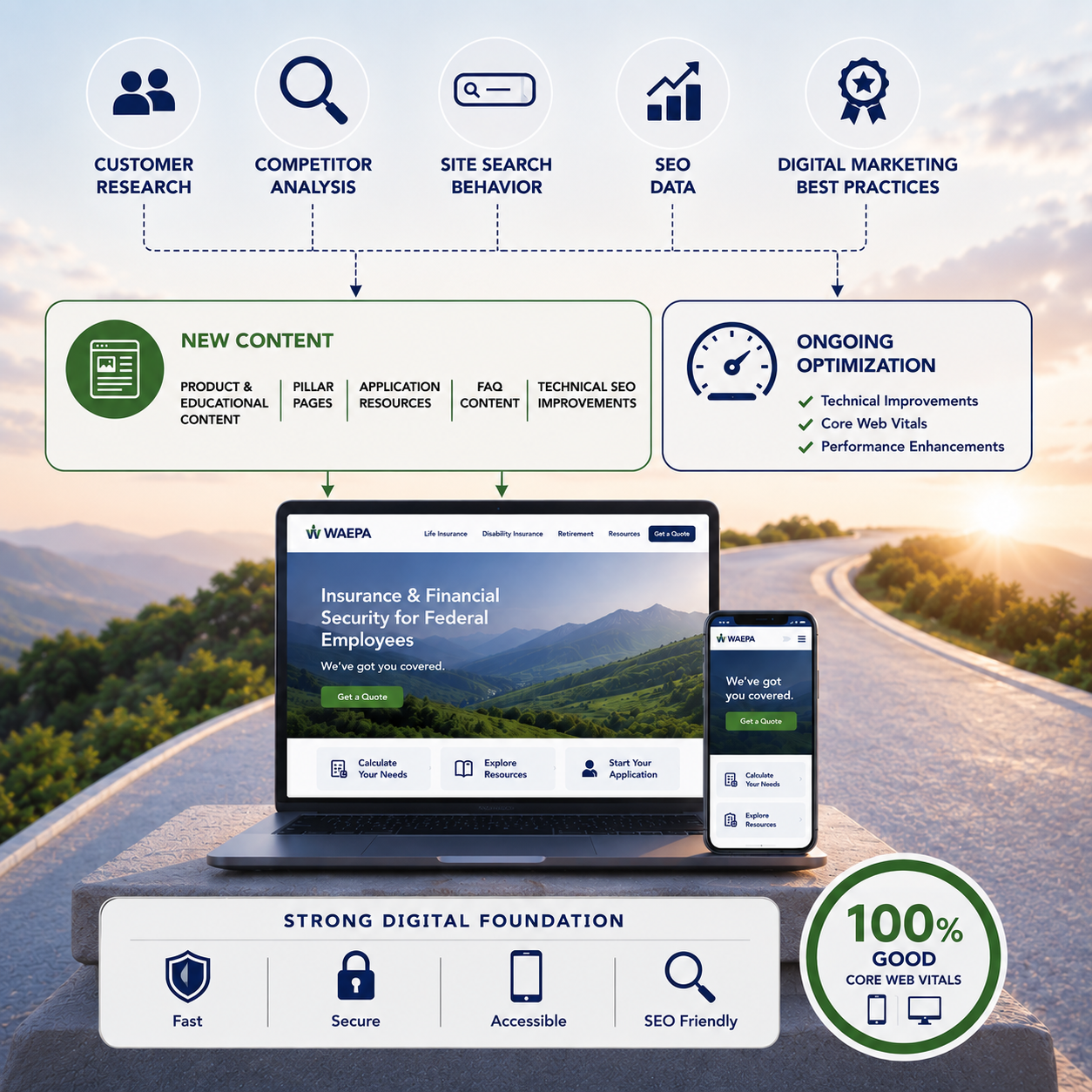
I used customer research, competitor analysis, site-search behavior, SEO data, and digital marketing best practices to identify information gaps and improve the customer experience. This included new product and educational content, pillar pages, application-process resources, FAQ content, technical SEO improvements, and ongoing website optimization.
I also helped lead the website and member-portal migration, managing analytics, content migration, URL structure, 301 redirects, and post-launch issues. Later improvements to the technical foundation helped bring Core Web Vitals to 100% “Good” on both mobile and desktop.
Building the measurement engine
The measurement framework changed how the program could be managed.
Different channels performed different jobs: Display and YouTube could generate traffic and product engagement; Meta could generate click-to-apply activity; and Search was stronger at completed applications.
Rather than treating those differences as a reason to dismiss upper-funnel channels, I developed a framework for measuring meaningful actions throughout the journey. Customer lifetime value was then used to assign economic value to those actions and enable value-based bidding in Google Ads.
The infrastructure continued to mature through:
The individual improvements compounded over time. 2023 became WAEPA’s most successful year at the time, 2024 surpassed that record, and 2025 nearly matched it.
paid digital performance
Applications
New life policies
2025 vs 2019
Revenue
CPA
2025 vs 2019
Share of total applications.
9% → 25% · 2025 vs 2019
New-life-app revenue
Paid-digital ROI
Revenue 2025 vs 2019 · ROI 2022–2025
Paid-digital leads
2025 vs 2019
Paid-digital cost per lead
$1,883 → $375 · 2022–2025
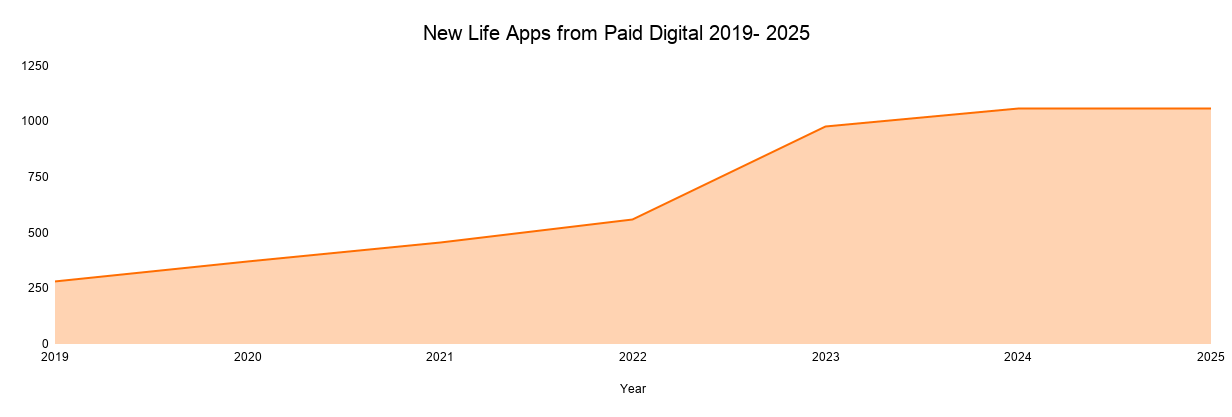
Paid digital became a much larger acquisition engine
Paid digital’s contribution to the primary application goal increased 178%, growing from 9% to 25% of total application volume. Digital investment also grew from 5% to 25% of the overall marketing budget, with annual paid-digital investment exceeding $1 million.
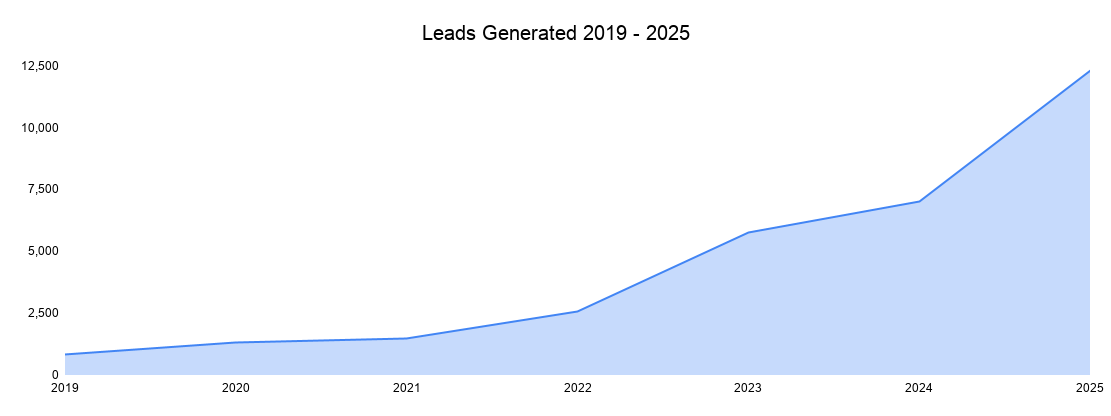
Lead generation scaled while becoming more efficient
Paid-digital leads increased 1,361%, while paid-digital cost per lead declined 80% from 2022–2025, from $1,883 to $375.
Paid digital also generated 275% more revenue from new life applications in 2025 vs. 2019, while ROI increased 38% from 2022–2025.
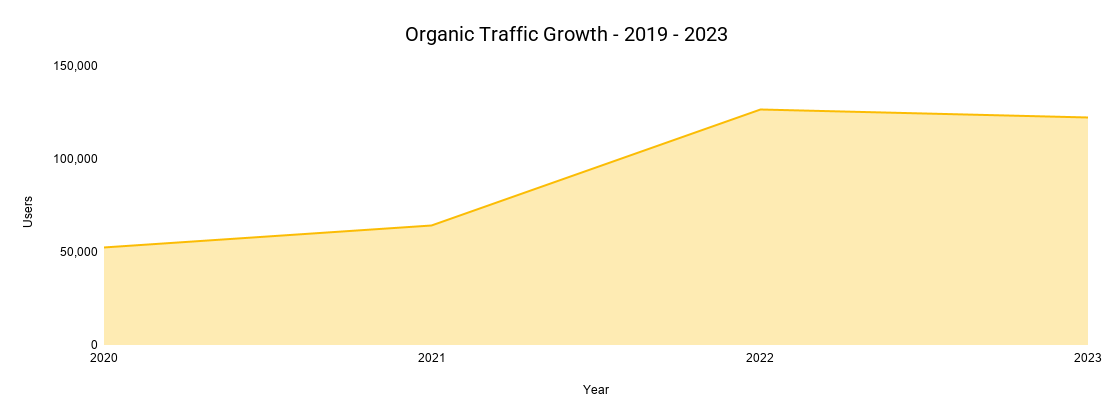
Organic discovery expanded
Organic traffic increased 134% from 2020–2023, while the mix of organic traffic shifted from approximately 75% branded / 25% unbranded to 25% branded / 75% unbranded by 2023.
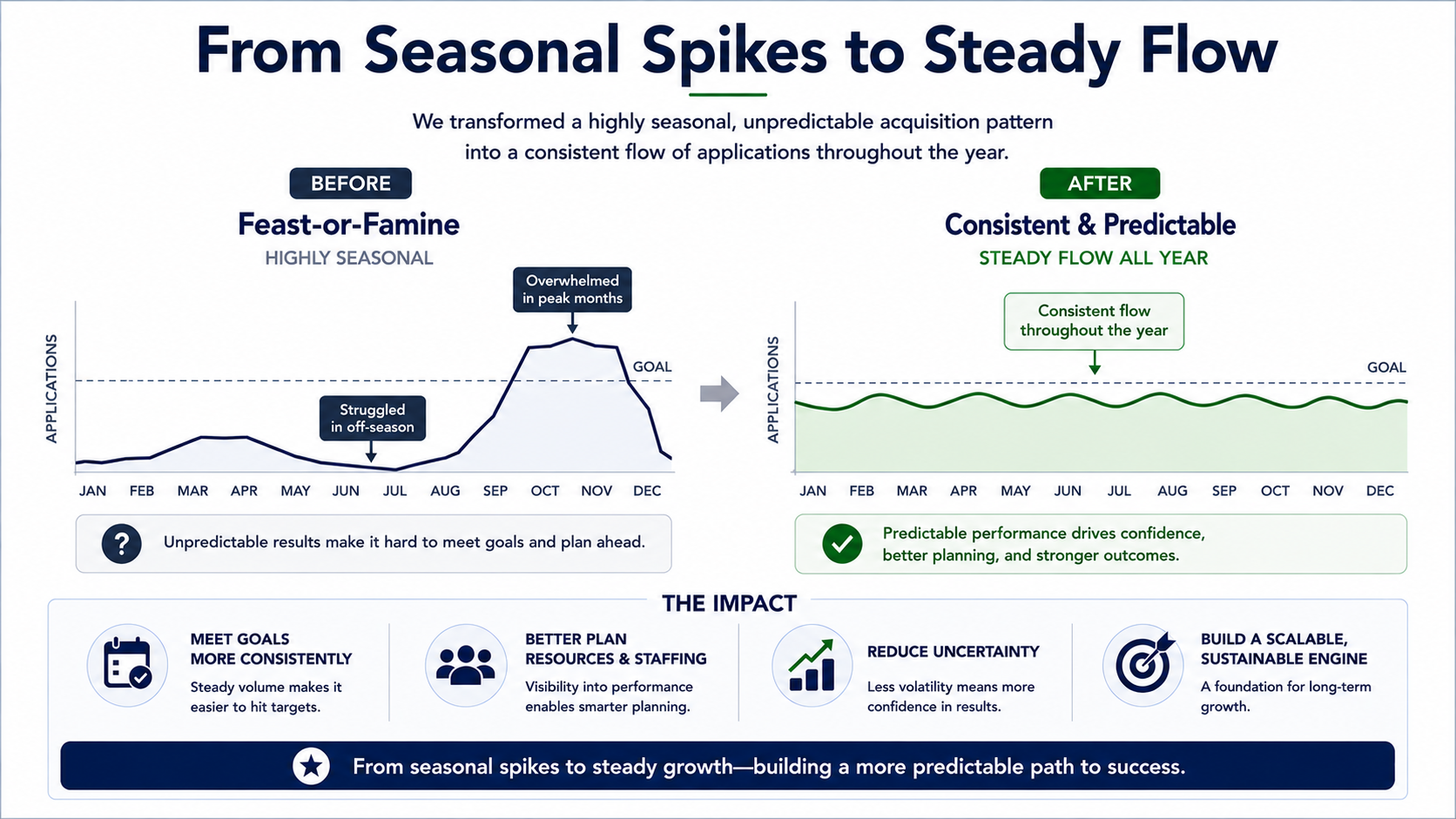
A more predictable acquisition model
Another important outcome was qualitative: the business moved from a highly seasonal “feast-or-famine” acquisition pattern toward a more consistent flow of applications throughout the year. This reduced uncertainty around meeting goals and helped the organization better plan resources and staffing.
Building the program required leading through influence. Many initiatives crossed paid media, SEO, content, creative, website, CRM, analytics, IT, compliance, and external partners—and much of the work depended on people I did not directly manage.
Lead with the “why”
Influence without authority starts with making the “why” clear: explaining how an initiative fit into the larger customer journey and business strategy rather than simply telling people what needed to happen.
Diagnose before you fix
I learned to distinguish between alignment problems and execution problems. Some challenges could be solved through better communication or a stronger business case. Others required stronger accountability, closer oversight, or ultimately a different partner.
Sponsorship is essential
Senior leadership sponsorship was equally important. Their sponsorship created the space to influence across teams, secure resources, and push through organizational friction.
Adapt tactics, hold the objective
The strategy had to evolve as platforms changed their policies, targeting capabilities, and available audience signals. I stayed focused on the underlying business objective while adapting tactics as the environment changed.
Nothing I accomplished would have been possible without my manager and executive leadership being aligned with the vision and consistently supporting the direction of the program.
The biggest lesson was that building a digital marketing program isn’t one big project or decision. It’s a series of decisions that have to compound over time, tied together by a cohesive strategy.
Many of the individual improvements crossed multiple disciplines, so understanding how all the pieces fit into the bigger picture mattered as much as getting any single piece right. And meaningful results took time. The early work often looked like individual fixes and incremental improvements. It was only as those decisions accumulated across channels, customer experience, measurement, technology, and processes that the impact became significant.
Build the foundation. Make thoughtful decisions. Connect the pieces. Learn from the data. Keep improving long enough for the gains to compound.
Need Help building your growth engine?
If your digital program needs the same kind of full-funnel strategy, measurement, and cross-team execution — let’s talk.